

Compressor failure reason and countermeasure analysis
The compressor is a machine used to increase gas pressure and convey gas. From the energy point of view, the compressor is a machine that converts the power energy of the prime mover into gas pressure energy. With the development of science and technology, the application of pressure energy is becoming more and more extensive, making the compressor one of the essential key equipment in many sectors of the national economy. During the operation of the compressor, some failures and even accidents will inevitably occur. A fault refers to an abnormal condition that occurs during the operation of the compressor, which can be restored to normal operation once the compressor is eliminated, while an accident refers to a damage situation. The two are often related, and if the fault is not eliminated in time, it will cause a major accident.
Common faults and their causes and measures
Insufficient exhaust:
The lack of displacement is compared with the compressor’s design capacity. Mainly can be considered from the following aspects:
1 Malfunction of the intake filter: fouling and clogging, which reduces the exhaust; the suction pipe is too long and the pipe diameter is too small, which causes the increase in the suction resistance and affects the air volume. The filter must be cleaned regularly.
2 The reduction of compressor speed reduces the displacement: improper use of the air compressor, because the displacement of the air compressor is designed according to a certain altitude, suction temperature, and humidity, when it is used in a plateau that exceeds the above standards When it goes up, the suction pressure decreases, etc., and the exhaust volume will inevitably decrease.
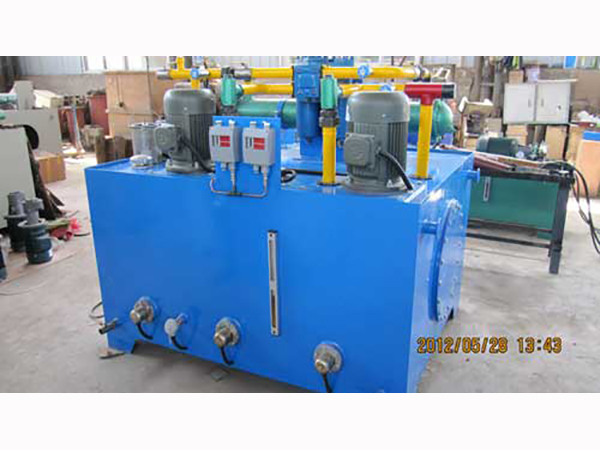
3 Cylinders, pistons, and piston rings are severely worn and out of tolerance, which increases the clearance and leakage, which affects the displacement: when it is normal wear, it is necessary to replace the wearing parts, such as piston rings, in time. If the installation is incorrect and the gap is not appropriate, it should be corrected according to the drawing. If there is no drawing, experience data can be taken. For the gap between the piston and the cylinder along the circumference, if it is a cast iron piston, the gap value is the diameter of the cylinder 0.06/100~0.09/100; For aluminum alloy pistons, the gap is 0.12/100~0.18/100 of the air diameter; steel pistons can take the smaller value of aluminum alloy pistons.
4 The stuffing box is not tightly leaked and the air volume is reduced: the reason is that the stuffing box itself does not meet the requirements when it is manufactured; secondly, it may be caused by poor alignment of the piston rod and the center of the stuffing box during installation, resulting in wear, strain, etc. Air leakage; lubricating oil is generally added to the stuffing box, which plays a role of lubrication, sealing and cooling.
Abnormal exhaust temperature means that it is higher than the design value. In theory, the factors that affect the increase in exhaust temperature are: intake air temperature, pressure ratio, and compression index (for air compression index K=1.4). The actual situation affects the high suction temperature factors such as: low intercooling efficiency, or excessive scale formation in the intercooler affects the heat exchange, the suction temperature of the subsequent stage must be high, and the exhaust temperature will also be high. The air valve leaks and the piston ring leaks, which not only affects the increase of exhaust temperature, but also changes the pressure between stages. As long as the pressure ratio is higher than the normal value, the exhaust temperature will rise. In addition, water-cooled machines, lack of water or insufficient water will increase the exhaust temperature.
Abnormal pressure and reduced exhaust pressure
The air volume discharged by the compressor cannot meet the user's flow requirements under the rated pressure, and the exhaust pressure must be reduced. The reduction in the required exhaust pressure is a phenomenon, and the essence is that the exhaust volume cannot meet the user's requirements. At this time, I had to change to another machine with the same exhaust pressure and large exhaust capacity. The main cause of abnormal interstage pressure is air valve leakage or air leakage after piston ring wear. Therefore, the reasons should be found and measures should be taken from these aspects.
If some parts of the compressor break down, they will make an abnormal sound. Generally speaking, the operator can distinguish the abnormal sound. The gap between the piston and the cylinder head is too small and directly impacts; the piston rod and the piston connecting nut are loose or tripped, the end face of the piston is blocked by the cypress, the piston moves upward and collides with the cylinder head, metal fragments fall into the cylinder, and water accumulates in the cylinder. Both can emit percussive sound in the cylinder. Crankshaft bolts, nuts, connecting rod bolts, cross-head bolts in the crankcase are loose, tripped, broken, etc., the shaft diameter is severely worn, the gap increases, the cross-head pin and the bushing are too large or worn, etc. There was a crash sound in the crankcase. The exhaust valve piece is broken, the valve spring is loose or damaged, the load regulator is adjusted improperly, etc., can make a knocking sound in the valve cavity. From here to find the fault and take measures.
Overheating failure
Where the friction between crankshaft and bearing, crosshead and sliding plate, filler and piston rod, etc., the temperature exceeds the specified value, it is called overheating. The consequences of overheating: one is to speed up the wear between the friction pairs, and the other is that the heat of overheating continuously accumulates and causes the friction surface to be burned and the machine is scrambled to cause major accidents. The main reasons for bearing overheating are: uneven fitting of bearing and journal or too small contact area; bearing deflection and crankshaft bending and twisting; lubricating oil viscosity is too small, the oil circuit is blocked, the oil pump is faulty and the oil is cut off, etc.; during installation There is no leveling, no gap is found, the main shaft and the motor shaft are not aligned, the two shafts are tilted, etc.
Compressor accident
Fracture accident
Breaking of connecting rod: There are several situations: connecting rod screw is broken, and the reasons are: plastic deformation of connecting rod screw after long-term use; poor contact between screw head or nut and the end face of the big end produces eccentric load, which can be as large as the bolt. As much as seven times the pure axial tension, therefore, no slight skew is allowed, the contact should be evenly distributed, and the distance between the contact points should not exceed 1/8 of the circumference, which is 450; the bolt material processing quality is problematic.
Piston rod fracture: The main fractured parts are the thread connecting the crosshead and the thread of the fastening piston. These two places are the weak links of the piston rod. If due to negligence in design, sloppy manufacturing and operational reasons , Fracture occurs more often.
If there is no problem in ensuring design, processing, and material, the pre-tightening force must not be too large during installation, otherwise the piston rod will break when the large force reaches the yield limit. After long-term operation, due to the excessive wear of the cylinder, the piston in the horizontal row will sink, which will cause additional load at the connecting thread. If it continues to run, it may break the piston rod. This should be paid special attention to during maintenance. In addition, due to damage to other parts, the piston rod may break when the piston rod is subjected to a strong impact.
Cylinder and cylinder head rupture: The main reason: For water-cooled machines, if you forget to drain the cooling water in the cylinder and cylinder head after stopping in winter, the cooling water will freeze and break the cylinder and cylinder head, especially in In the northern part of our country, the cooling water must be drained after parking; the temperature of the cylinder rises because the water is interrupted in operation and is not found in time, and the cooling water is suddenly put in, causing the cylinder to burst; due to the small dead center gap, the piston Loose nut, as well as metal objects falling into the cylinder and plugging out of the piston will cause the piston to hit the cylinder head and cause it to break.
Burning and explosion accidents
The problem of carbon deposits in oil-lubricated compressors is often undesirable, because carbon deposits will not only cause the piston ring to be stuck in the groove, the valve will not work properly, and the air flow channel area will decrease and increase the resistance, but also Under certain conditions, carbon deposits will burn, leading to an explosion accident in the compressor. Therefore, the lubricating oil in the cylinder cannot be supplied too much, and the gas that is not well filtered and contains a large amount of dust can not be sucked into the cylinder, otherwise the formation of carbon deposits and the gas containing a large amount of volatile matter may cause an explosion. In order to prevent combustion and explosion, it is necessary to plan maintenance and regularly clean the grease on the gas storage tank and pipeline.
Because the compressor high-pressure stage valve is not tight, the high-pressure and high-temperature gas is returned to the cylinder, and high temperature is generated near the exhaust valve. When there is carbon deposit, it will cause an explosion. In order to avoid accidents, it is necessary to repair the exhaust valve, check the leaking parts, and eliminate the fault at this time.